
Tuolumne County Wanted Page Status
Looking for who is wanted in Tuolumne County? The Sheriff's Office runs a public CitizenRIMS portal. Its Warrants and Most Wanted modules are both switched off. No photo roster exists there, and no separate TCSO name list is available either. That leaves no public count of wanted persons, no update schedule, and no stated photo policy. It does not mean the county has no active warrants. It just means the Sheriff keeps those two sections closed to public browsing.
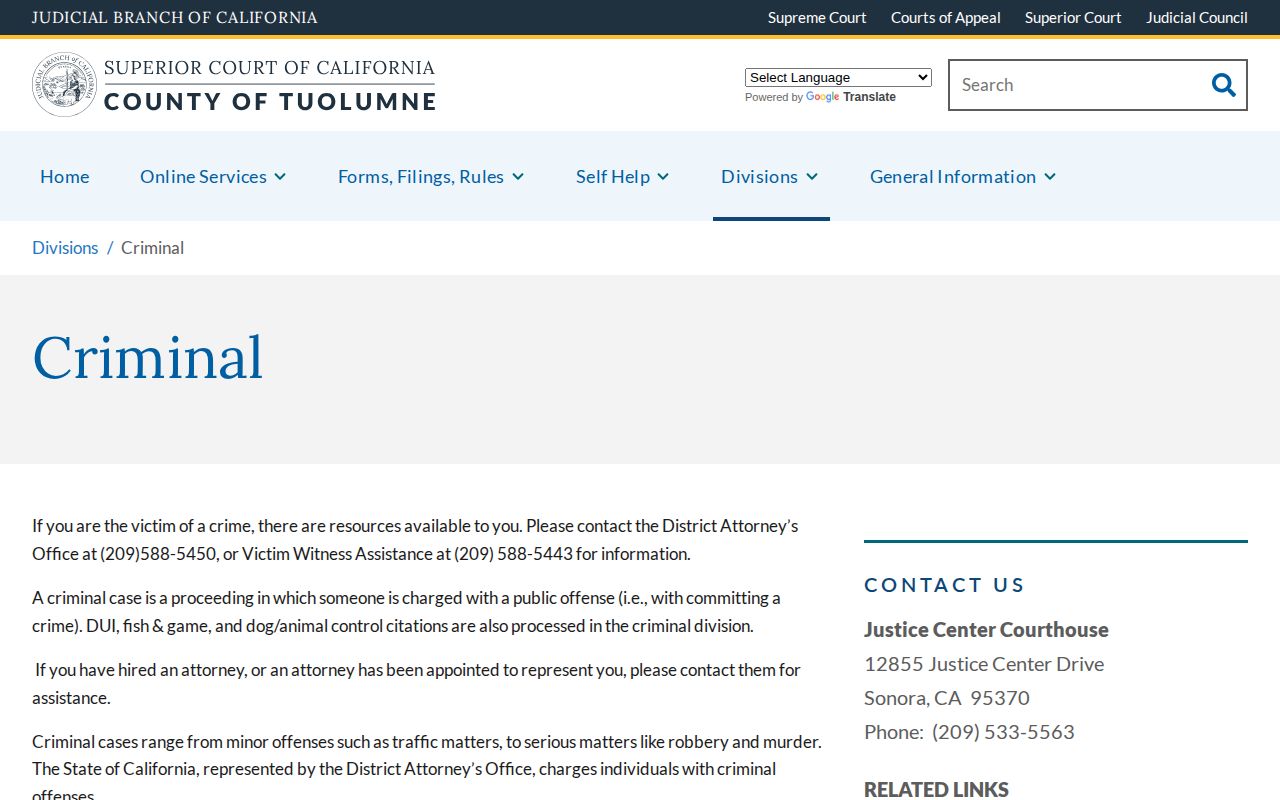
Old search results die slowly. A social media post or cached page can linger long after an arrest, a recall, or a court change, and unofficial copies often lag even further behind. For a real answer, go straight to the court, the county warrant line, a lawyer, or law enforcement. The Tuolumne Superior Court Criminal Division lays out the local path for warrant and criminal-case questions. That makes the court the best first stop whenever a public wanted list is missing.
Tuolumne County Wanted Fields
Most active wanted lists carry a familiar set of details. Photos, names, charges, physical descriptions, case numbers. Tuolumne County's module shows none of them, since it is turned off. The table below covers what is actually known about each element and where a current answer can be sought instead.
| Listing field | Tuolumne County public status |
|---|---|
| Name | No active Sheriff Most Wanted name list was found. Use a known case identifier with the court when possible. |
| Photo | No wanted photo module is enabled. Do not treat an old or third-party image as a current official notice. |
| Warrant basis or charge | Not published through a wanted list. The court case may show filed charges and later case events. |
| Physical description | Not publicly supplied through the disabled module. |
| Last known area | No verified public field is available, and an address should never be inferred from an old post. |
| Caution or status flag | Only current law-enforcement or court guidance should be relied on. |
An old page proves very little. A photo sitting on a stale site cannot tell you a warrant is still live. The reverse holds too. Someone absent from a disabled module may still have a warrant. Status shifts with recalls, arrests, court review, and even routine clerical updates.
Note: Tuolumne County wanted information should be confirmed at the source because disabled modules supply no public status date.
Use Tuolumne County Wanted Notices
Nothing is posted for browsing right now. Even so, Tuolumne County can still issue a wanted notice as a one-off announcement from the Sheriff or the court. Treat any such notice as perishable. What matters is the issuing office, the publication date, the case or warrant number, and a working contact route. A copied image floating around online is worth far less than the source itself.
- Confirm that the notice comes from TCSO, the court, or another named law-enforcement agency. A repost without a source date is not enough.
- Read the notice for its case identifier, alleged basis, publication date, and agency instructions. Do not add missing facts from comments or search snippets.
- Ask the court or warrant line whether the notice remains current. An arrest, recall, or later court act may have changed it.
- Send tips only to the stated official contact. Never approach the person or publish a claimed location online.
Working from the source beats clicking through a gallery of photos. It also keeps an old wanted image from being mistaken for a current status report. If the Sheriff ever turns the Most Wanted module back on, check anything you find there against a fresh court or warrant-line answer before acting on it.
Check Tuolumne County Warrants
In Tuolumne County, a warrant check is really a handoff among official offices. No single public search box covers everything. The online criminal portal helps only when you already hold a case number or a driver's-license number. Even then, a court search is not final proof that no warrant exists. Bring exact identifiers with you, and ask each office plainly what it can confirm.
- Gather the person's exact legal name and any known court case number. A Sheriff's incident number is useful context, but it may not match the Superior Court number.
- Check the official criminal case portal when the court case number or driver's-license number is available. Read the docket at its actual procedural stage.
- Call the Tuolumne Superior Court Criminal Division at 209-533-5563, between 8 a.m. and 3 p.m., for case-specific guidance. Ask what identifier the clerk needs.
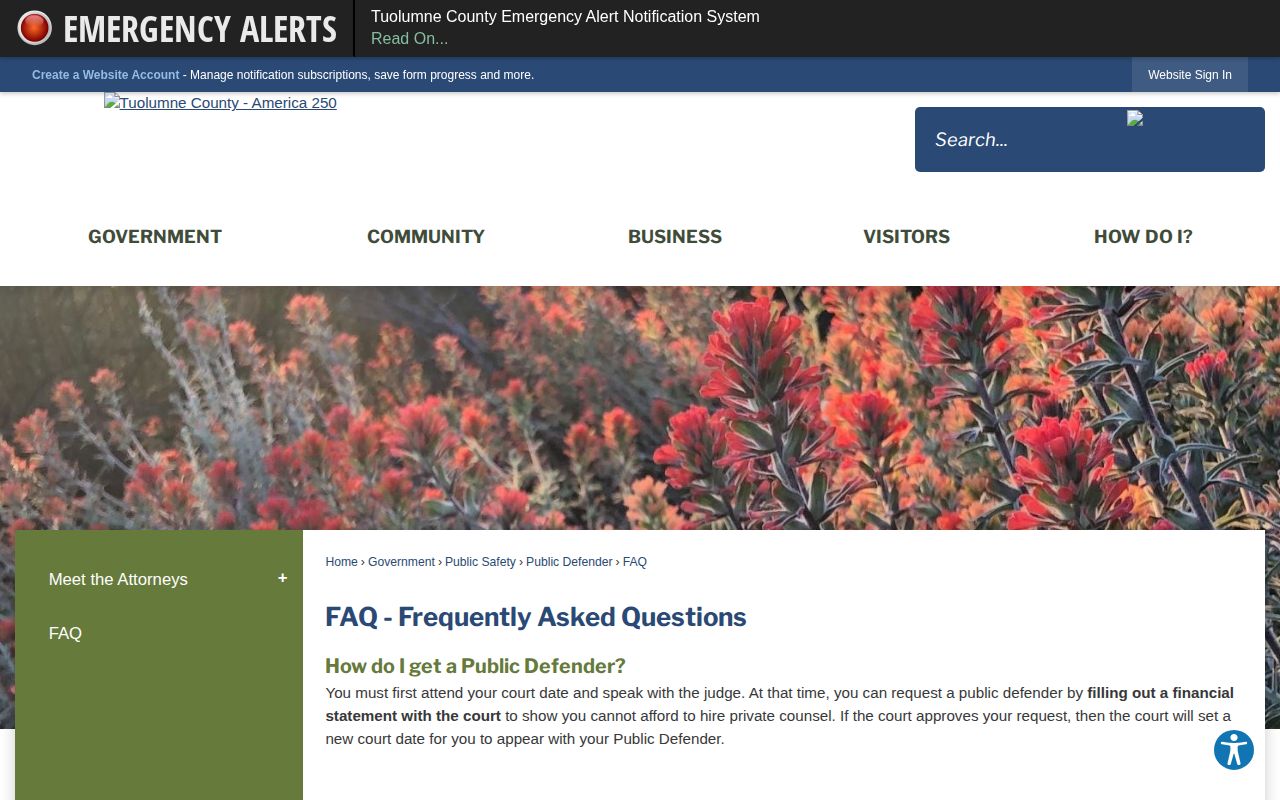
- Use the county warrant line at 209-533-5812 for the separate county confirmation route. The Public Defender FAQ publishes that number.
- If the matter concerns the person making the inquiry, contact counsel and the court for lawful next steps. Do not rely on an unofficial form or attempt to avoid contact.
These channels do not all reach the same data. The portal finds a known criminal case through a court identifier or a driver's-license number, but it is not an open name search and it does not replace the Sheriff. A clerk can walk you through the court's record. The county warrant line offers a separate route. A lawyer can weigh those answers against each other and handle a live case without leaning on a stale web page. One common snag: a number pulled from an arrest feed may be an agency incident number rather than a Superior Court case number. That is why it fails in the portal.
No case number in hand? Keep the request narrow. Ask the Criminal Division which official search method fits and what details separate people with similar names. Never hand extra personal information to an unofficial warrant form. If an office says it cannot confirm the matter, that is not the same as proof that no warrant exists. Write down the date, the office, and the scope of each inquiry, so later answers can be compared fairly. The county's own FAQ keeps the official warrant-line guidance, which is far more useful than a guessed roster because it sends you to an office that can act on a live matter.
Tuolumne County Warrant Types
The Superior Court splits warrants into two types. An arrest warrant is one. A bench warrant is the other. Both let law enforcement act, and both call for current official guidance, yet they surface at different points in a case. Think of a warrant as a court-backed direction. That's all it is, plain and simple.
| Type | What it generally means locally | Safe verification path |
|---|---|---|
| Arrest warrant | A judge has authorized an arrest in connection with an alleged offense or filed matter. | Confirm through counsel, the court, or the county warrant line. |
| Bench warrant | The court issued a warrant tied to a court obligation, such as a missed appearance or unfulfilled order. | Ask the Criminal Division for case-specific directions and whether a hearing can be addressed. |
Never guess the type from a news story or an arrest card. Social posts are no better. A story can leave out later court action. An arrest entry can drop off the Sheriff's rolling feed while the court case keeps moving. The flip side happens too. A warrant recalled months ago may still sit in an old copy of a page.
Resolve Tuolumne County Warrants
Clearing a warrant takes planning. Work through a lawyer and the court, not guesswork. The court itself warns of a catch: a warrant can stay active even after a clerk calendars the matter. A phone call, a portal result, or a court date on the books does not mean the warrant is gone. So ask direct questions. Learn exactly what steps the court requires, which papers to bring, and whether your counsel should appear or reach out first.
No single surrender script fits every case. The warrant type, the underlying facts, any other holds, and the judge's own direction all shape the safe path. What matters is confirming the warrant and resolving it lawfully, never hiding from it. If a fresh arrest ties into the same matter, the Tuolumne County arrest and custody guide walks through the Sheriff's separate feed, phone checks, booking-record requests, and the court route.
Important: A portal result alone never proves a warrant is cleared, so confirm with the court, your lawyer, or the official warrant line before you act on it.
Note: A court disposition is the later case outcome; a warrant or wanted notice records an earlier allegation or court command.
Report Tuolumne County Wanted Tips
If you believe someone is wanted, keep your distance. Never follow, restrain, or try to detain the person yourself. Call 911 the moment there is any immediate danger. For tips that can wait, Tuolumne County Sheriff's Office dispatch takes the information. Stick to what you saw with your own eyes. Note the location, the time, which way the person went, and any vehicle details. Save speculation and sensitive locations for the dispatcher, not for social media.
Tuolumne County Sheriff's OfficeNonemergency dispatch: 209-533-5815, available 24/7
Main office: 209-533-5855
28 N. Lower Sunset Drive
Sonora, CA 95370
Tuolumne County has no verified Crime Stoppers reward program. It has no anonymous reward promise and no Warrant Wednesday schedule the Sheriff has published. So treat any reward or anonymity claim with doubt. A caller can simply ask dispatch how a tip will be handled, but assuming program terms the Sheriff never announced is a mistake.
Safety: Never confront anyone; give urgent facts to 911 and nonurgent tips to TCSO dispatch.
Tuolumne County Wanted Social Alerts
The county site links the official Tuolumne County Sheriff's Facebook page. That page does not run a steady wanted-photo series or booking-photo schedule. Treat its posts as selective notices rather than a full warrant index. And a post's date says nothing about whether a person is still wanted today.
TC Connect covers county services broadly. It is not a Sheriff warrant tool or an inmate-photo app. VINE tracks custody changes, and Everbridge pushes emergency alerts. None of them stands in for a case-specific warrant check. California Penal Code §13665 also treats a social image differently from an agency-run records portal, which is worth knowing before you share one. For how a filed case actually ends, the Superior Court docket is the record that counts.